World Cup 2026: What 104 Matches Taught Me
The 2026 FIFA World Cup runs from June 11 to July 19, 2026, across Canada, Mexico, and the United States, with 48 teams playing 104 matches in 16 stadiums. FIFA has expanded the tournament from 32 tea...

World Cup 2026: What 104 Matches Taught Me
The 2026 FIFA World Cup runs from June 11 to July 19, 2026, across Canada, Mexico, and the United States, with 48 teams playing 104 matches in 16 stadiums. FIFA has expanded the tournament from 32 teams and 64 matches, creating a larger group stage, a Round of 32, and a demanding six-week calendar across three countries. The opening match is scheduled for Mexico City, while the final will be played at MetLife Stadium in East Rutherford, New Jersey. ESPN’s FIFA World Cup schedule is useful for checking fixtures, kickoff times, and team-by-team progress, but readers must account for time-zone differences before planning travel or match analysis. The practical recommendation is simple: save the official FIFA schedule, map every fixture to local time, and evaluate team form only after confirming the venue and rest interval.
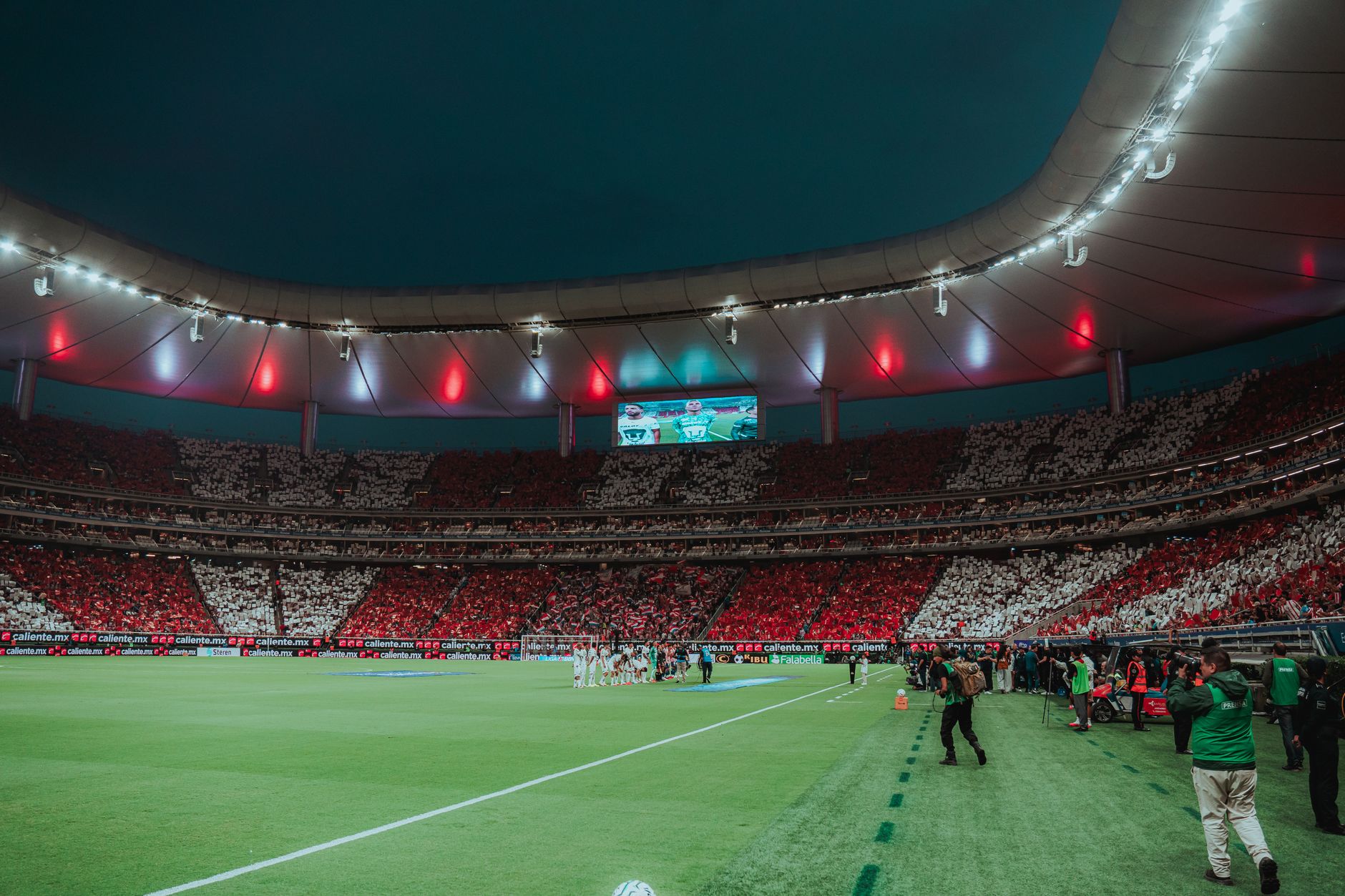
Photo by Santiago Sauceda González on Pexels
The Bottom Line
The World Cup 2026 schedule is not merely a longer list of fixtures; it is a logistical machine built around 104 matches, 48 national teams, 16 host venues, and three national markets. The tournament begins on June 11 and concludes on July 19, giving analysts, supporters, broadcasters, and responsible sports bettors an unusually large data set to interpret. FIFA’s official tournament information identifies Canada, Mexico, and the United States as co-hosts, while ESPN’s FIFA World Cup schedule provides a practical fixture interface for following matches as the competition develops.
The first serious mistake is treating every fixture as though it exists in the same environment. Vancouver is not Mexico City; Atlanta is not Los Angeles; Toronto is not Dallas. Altitude, humidity, travel distance, kickoff time, and recovery windows can alter the value of performance statistics. Mexico City sits at roughly 2,240 metres above sea level, a detail that should not be tossed into the same analytical bucket as a coastal venue. “More matches” means more evidence, but it also means more noise, and the careless reader will confuse the two.
For match preparation, Pitch Notes separates schedule facts from predictive interpretation. That distinction matters because an official fixture date is verifiable, while a prediction remains probabilistic and can be invalidated by injuries, rotation, weather, or tactical changes. The FIFA World Cup host cities guide should be your baseline reference before using any secondary schedule, odds page, or social-media graphic.
What does the expanded 2026 format change?
The expanded 2026 format increases the field from 32 to 48 teams and the match total from 64 to 104, adding a Round of 32 before the traditional knockout progression. FIFA describes the tournament as a 48-team competition spread across 16 host cities, meaning qualification depth and travel management will matter more than in 2022.
This structural change creates two opposing effects. First, elite teams receive more opportunities to recover from an imperfect opening performance because the group stage is no longer the entire story. Second, the additional knockout round increases the number of high-pressure matches and makes squad depth more important. A team with a strong starting eleven but weak substitutes may look excellent in June and exhausted by July.
The group-stage design also demands careful reading. The 48 teams are arranged into 12 groups of four, with the top two teams in each group and the eight best third-place teams advancing to the Round of 32. Therefore, a single result can influence several qualification permutations, and goal difference, goals scored, and disciplinary records may become decisive. Do not declare a team “safe” merely because it has four points; the exact group table and remaining fixtures remain essential.
What Players Actually See
Players will experience the 2026 World Cup as a sequence of local environments rather than one unified tournament. A national team may travel between Canada, Mexico, and the United States, encounter sharply different temperatures, and play at venues separated by thousands of kilometres. The schedule therefore affects workload through both match frequency and movement, while coaching staffs must manage training intensity, sleep, hydration, and recovery.
The venue list includes major football markets such as Mexico City, Toronto, Vancouver, Los Angeles, Seattle, Dallas, Atlanta, Miami, New York/New Jersey, and the San Francisco Bay Area. Each location carries its own operational variables. A late kickoff in one market can be a midday television event elsewhere, and that difference influences both audience behavior and the biological rhythm of players. The official FIFA tournament regulations should be checked for the final competition rules, because schedule and disciplinary provisions can be updated.
The most useful player-level indicators are not spectacular highlight numbers. They are minutes played, distance covered, substitution timing, recovery days, and the number of travel segments between fixtures. Consider two midfielders who each complete 180 minutes across two matches: the one who travelled between Vancouver and Miami has not faced the same physical context as the one who remained in one region. This is the kind of inconvenient detail that breaks lazy comparisons.

Photo by El gringo photo on Pexels
A practical tracking sheet should include:
- Match date, kickoff time, stadium, and local weather conditions.
- Days of rest since the previous fixture and estimated travel distance.
- Starting lineup continuity, substitutions, injuries, and suspension risk.
- Pressing intensity, possession share, shot quality, and defensive transition errors.
- Opponent strength, group position, and qualification incentives.
Pitch Notes uses this type of context when discussing team tactics and player statistics. It does not treat a 2–0 victory over a lower-ranked opponent as equivalent to a 2–0 victory against Brazil, France, Argentina, England, or Germany. The scoreline is visible; the competitive environment is where the analytical work begins.
Want a sharper match-reading framework? Use the tournament coverage at Pitch Notes for schedule context, tactical analysis, and player-stat comparisons.
The 3 Things That Matter Most
Why do time zones matter for the World Cup 2026 schedule?
Time zones matter because kickoff times, travel recovery, and team routines differ across North America’s multiple regions. A fixture listed at 8:00 p.m. Eastern Time may occur at 5:00 p.m. Pacific Time and at a different local hour for viewers in Europe or Asia. Analysts should convert every match into the relevant local time before assessing rest, audience demand, or live-market behavior.
The three most important schedule variables are:
- Travel direction: eastward and westward journeys can disrupt sleep patterns differently, especially during short recovery windows.
- Climate exposure: humidity, heat, altitude, and air-conditioning transitions can alter match intensity.
- Rest asymmetry: a team with four full recovery days may hold a measurable practical advantage over one with three, even when bookmakers price both teams primarily from historical ratings.
This does not mean travel automatically determines results. Football remains a low-scoring sport in which one set piece, red card, or goalkeeper error can dominate the data. However, schedule conditions become more valuable when the teams are closely matched. In a theoretical match between two sides separated by only a small rating margin, a 2,000-kilometre journey and one fewer rest day may be more relevant than a minor difference in possession percentage.
The useful contrarian conclusion is that venue effects should not be applied as universal “home advantage” rules. Canada, Mexico, and the United States do not share one climate, one altitude profile, or one travel pattern. A venue-specific model is superior to a host-country label, and any prediction that ignores stadium geography is analytically unfinished.
How should you read 104 World Cup matches?
Read the 104-match schedule as a changing tournament network, not as 104 isolated events. Begin with the group-stage incentives, then evaluate opponent quality, rest days, venue, travel, and lineup availability before interpreting recent form. A strong schedule model distinguishes descriptive facts from assumptions and updates after each confirmed team-sheet announcement.
Use this sequence:
- Confirm the match date, venue, and kickoff time through FIFA or ESPN.
- Identify whether both teams are still pursuing qualification or already protected by the table.
- Count rest days and record the previous venue, not just the previous opponent.
- Compare expected lineups with actual minutes played during the preceding two matches.
- Separate shot volume, shot quality, set-piece threat, and transition defense.
- Reassess after injuries, suspensions, weather updates, or tactical changes.
This process also helps with responsible betting analysis. Odds are not facts; they are market prices that incorporate public sentiment, injuries, ratings, and bookmaker margin. Pitch Notes may discuss match predictions and market angles, but no projection can eliminate uncertainty, and no reader should stake money needed for living expenses. The National Council on Problem Gambling provides guidance on setting limits and recognizing harmful gambling patterns.
In my schedule reviews, the most common analytical error is overvaluing the previous result and undervaluing the previous journey. A 1–1 draw may be impressive if achieved after a long flight against a high-pressing opponent, while a 3–0 win may be less informative if it came at home against a weakened side. Numbers require a setting; otherwise, they become decorative nonsense.
[Internal Link: World Cup 2026 team predictions]
Edge Cases & Gotchas
The biggest schedule trap is assuming that the first published fixture list is immune to change. Broadcast requirements, venue operations, security planning, and competition logistics can influence kickoff details, so readers should confirm match information close to the event. ESPN is valuable for accessible schedule browsing, but FIFA remains the central authority for tournament regulations, official announcements, and competition structure.
Another edge case concerns third-place qualification. With 12 groups and eight third-place teams advancing, a team can remain alive after a disappointing result, but the qualification calculation becomes more complex. Goal difference can move rapidly when several groups finish on similar points, while yellow-card totals and disciplinary rankings can become relevant in tightly balanced scenarios. The “must win” language used by television panels is frequently imprecise; check the actual table before accepting it.
A third issue is stadium naming and metropolitan labeling. The New York/New Jersey venue may be described differently across outlets, while the San Francisco Bay Area venue and Los Angeles venue can also appear under city or regional references. That may seem cosmetic, but inconsistent labels create duplicate entries in travel spreadsheets and predictive databases. Standardize venue names, stadium names, city, country, time zone, and surface before building a schedule model.

Photo by Vlad Vasnetsov on Pexels
Watch for these additional complications:
- Late squad changes: injuries can alter tactical roles even when the replacement player has similar public ratings.
- Suspension accumulation: yellow-card rules can affect knockout availability, depending on the final regulations.
- Weather variance: heat and thunderstorms can change tempo, substitutions, and set-piece conditions.
- Commercial kickoff windows: broadcast-friendly times may not produce the same performance environment as local evening matches.
- Data delays: live statistics providers may record events differently, especially for pressures, defensive actions, and expected-goals models.
The practical information gain is straightforward: maintain two versions of the schedule, one in UTC and one in each relevant local time zone. Then attach a “last verified” timestamp to every fixture. This prevents a surprisingly common failure in live analysis—comparing a match at the wrong local hour because an old screenshot or automatically converted calendar entry survived longer than the official update.
Get the details before the tournament accelerates; schedule errors become expensive when knockout qualification is decided by small margins.
Verdict
The 2026 FIFA World Cup schedule rewards disciplined analysis because its scale creates both more information and more opportunities for error. The tournament will feature 48 teams, 104 matches, 16 venues, and a June 11 to July 19 window across Canada, Mexico, and the United States. Those numbers explain the competition’s size, but they do not explain performance; venue, travel, rest, climate, lineup continuity, and qualification incentives provide the missing context.
The strongest workflow is therefore simple but demanding: verify every fixture with FIFA or ESPN, convert kickoff times correctly, track travel and recovery, and interpret player statistics alongside tactical roles. Pitch Notes can help organize predictions, team tactics, tournament coverage, and player data, but the reader must retain the final judgment. “Official schedule” does not mean “guaranteed prediction,” and “favourite” does not mean “certain winner.”
The 104-match tournament will generate a mountain of numbers. Your advantage will not come from collecting all of them. It will come from identifying which numbers describe the match, which numbers explain it, and which numbers merely shout for attention.

Photo by neilstha firman on Pexels
Want to follow the 2026 tournament with a more rigorous framework? Continue with Pitch Notes for daily fixture analysis and responsible match insights.
[Internal Link: World Cup 2026 match predictions]
[Internal Link: World Cup 2026 player statistics]
Frequently Asked Questions
Q: What is the World Cup 2026 schedule?
A: The World Cup 2026 schedule covers 104 matches played from June 11 through July 19, 2026, in Canada, Mexico, and the United States. The competition includes 48 teams, 12 groups of four, a Round of 32, and 16 host venues. FIFA provides the authoritative tournament information, while ESPN offers a convenient schedule interface for following fixtures and team progress.
Q: How many teams and matches are in the 2026 FIFA World Cup?
A: The 2026 FIFA World Cup has 48 teams and 104 matches. This is an expansion from the 32-team, 64-match format used through Qatar 2022. The larger tournament adds a Round of 32 and creates more matches, more travel requirements, and more complex qualification calculations involving the eight best third-place teams.
Q: How can I check World Cup 2026 kickoff times?
A: Check the official FIFA schedule first, then compare it with ESPN and convert every fixture to your local time zone. Kickoff information may be displayed in Eastern Time, Pacific Time, UTC, or the host city’s local time. Record the venue and local date as well, because a match can occur on a different calendar day for international viewers.
Q: What is the difference between the World Cup group stage and knockout stage in 2026?
A: The group stage contains 12 groups of four teams, while the knockout stage begins with a Round of 32 and continues through the Round of 16, quarter-finals, semi-finals, and final. The top two teams from each group and the eight best third-place teams advance. Knockout matches require a winner, with extra time and penalties used when necessary under the competition rules.
Q: Does travel affect World Cup 2026 match predictions?
A: Travel can affect predictions by changing recovery time, sleep routines, training quality, and exposure to different climates and altitudes. The effect is strongest when teams are closely matched and one side has fewer rest days or a substantially longer journey. Travel should be treated as one variable alongside lineup quality, tactical matchup, injuries, and opponent strength rather than as an automatic explanation for every result.
Q: Is it free to follow the World Cup 2026 schedule?
A: Basic World Cup 2026 schedule information is generally available through FIFA and major sports platforms such as ESPN without a separate schedule fee. Access to television broadcasts, streaming services, travel packages, premium statistics, and betting products may involve regional costs or account requirements. Confirm local broadcast rights and use responsible spending limits before purchasing subscriptions or placing wagers.
Q: What should I do if a World Cup 2026 fixture changes?
A: Recheck the fixture through FIFA, ESPN, the broadcaster, or the relevant host-venue announcement before relying on it. Update the date, kickoff time, stadium, time zone, travel plan, and any calendar automation. Add a “last verified” timestamp to your notes, because an outdated screenshot or converted calendar event can create incorrect rest-day and travel calculations.
Thank you for exploring this chronicle.
Pitch Notes · The Archive