Top 5 World Cup Football Teams for 2026
Brazil are the strongest overall World Cup football pick for 2026 because their squad combines elite attacking depth, tournament experience, and tactical flexibility across three host nations: the Uni...

Top 5 World Cup Football Teams for 2026
Brazil are the strongest overall World Cup football pick for 2026 because their squad combines elite attacking depth, tournament experience, and tactical flexibility across three host nations: the United States, Canada, and Mexico. FIFA’s expanded tournament will feature 48 teams and 104 matches, while Brazil remain the only nation to have appeared at every men’s World Cup since 1930. France offer the best recent knockout-stage record, Argentina bring the defending-champion profile from Qatar 2022, Spain provide the most convincing possession structure, and Germany represent the highest-upside revival candidate. The most important measurable distinction is not simply star power; it is squad balance across nine matches, travel demands, injuries, and penalty-shootout resilience. Use these rankings as a structured starting point, then verify confirmed squads, qualifying form, and official match data before making any prediction.
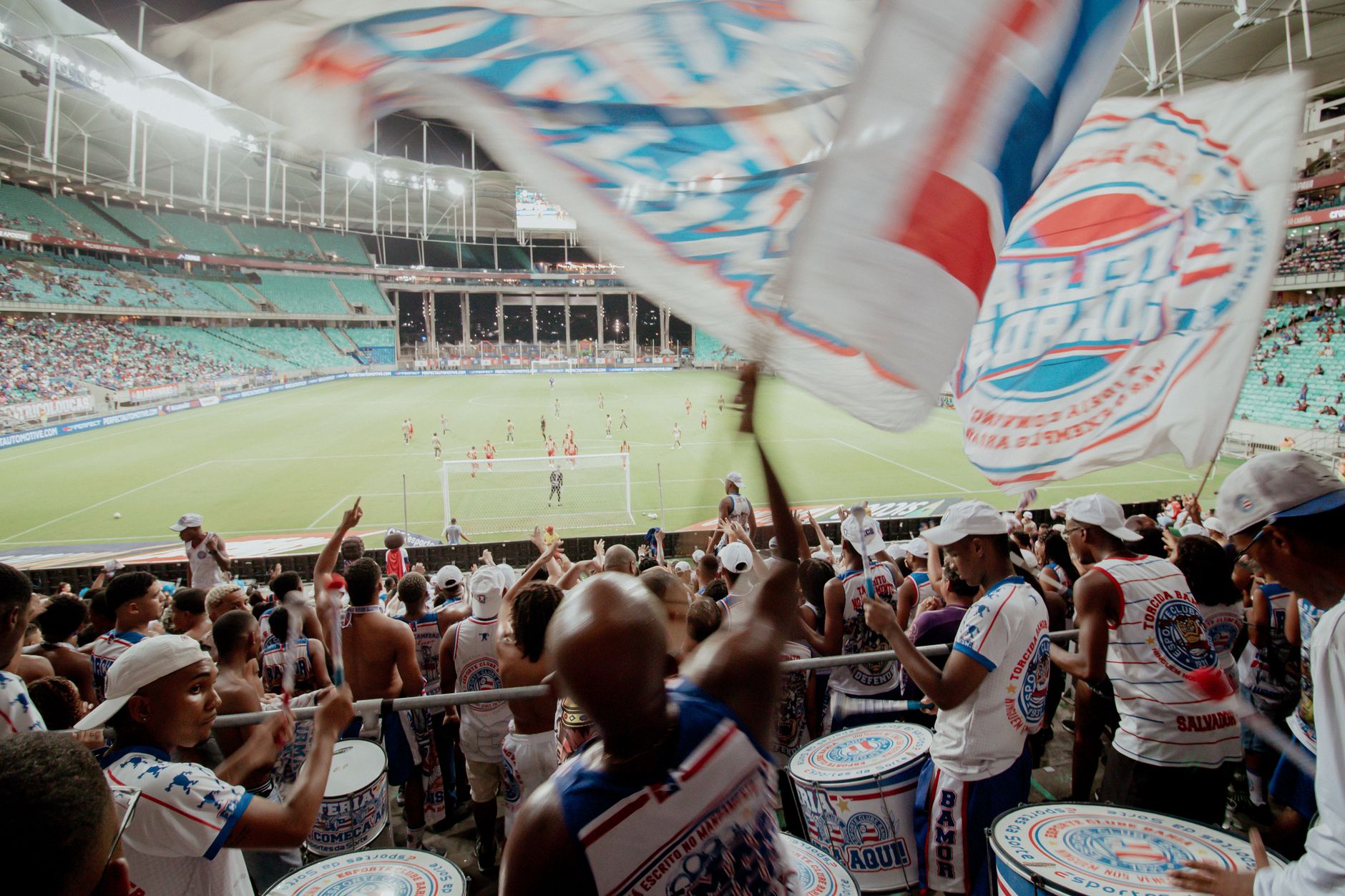
Photo by Priscila Almeida on Pexels
Brazil’s case is powerful, but football punishes lazy certainty. Pitch Notes evaluates the leading 2026 contenders through a repeatable model rather than theatrical “guaranteed winner” claims. The assessment considers recent competitive performance, squad depth, tactical adaptability, historical production, and the logistical burden created by a 48-team tournament spread across North America. The [Internal Link: 2026 World Cup tournament guide] provides broader competition context, while the analysis below concentrates on comparative team strength. Want the underlying tournament details? Start here.
The Top 5 at a Glance
- Brazil — Best overall blend of depth, attacking variety, and historical consistency.
- France — Best knockout specialist, with exceptional athleticism and tournament experience.
- Argentina — Best defensive cohesion among recent champions and proven pressure management.
- Spain — Best possession model, especially when controlling territory against deep defenses.
- Germany — Best value-style revival candidate if their midfield structure stabilizes.
This ranking is a forecast framework, not an official FIFA prediction. FIFA’s World Cup overview confirms the central competitive facts: the 2026 event will be hosted by Canada, Mexico, and the United States, and the format expands from 32 teams to 48. That expansion changes the analytical problem. More matches create more opportunities for depth to matter, but the knockout bracket still makes one poor 90-minute performance devastating. Brazil therefore lead the list because they can win through multiple game states: fast transition attacks, controlled possession, wide overloads, and individual finishing. France rank second because their athletic ceiling may be higher, while Argentina rank third because defending a title introduces pressure that no spreadsheet can fully remove.
[Internal Link: World Cup qualification and format explained]
Why these five instead of England, Portugal, or the Netherlands?
England, Portugal, and the Netherlands remain serious contenders, but the top five receive stronger combined scores across tactical identity and historical tournament evidence. England possess elite Premier League depth, Portugal have extraordinary attacking options, and the Netherlands remain tactically sophisticated; nevertheless, each carries a question about semifinal-level consistency, defensive transitions, or selection balance. This is the first useful contrarian point: “more famous players” does not automatically mean a better World Cup team. A 2026 squad must survive travel, climate variation, injuries, and opponent-specific game plans. The United States, Mexico, and Canada will create different environmental conditions from match to match, so analysts should discount rankings based only on club reputation. Observe the starting midfield, defensive recovery speed, and set-piece prevention rather than counting social-media headlines.
#1 Brazil: Best Overall
Brazil are the best overall 2026 World Cup football pick because they possess the broadest theoretical route to victory: elite one-versus-one attackers, physically capable defenders, midfield runners, and a national-team identity that has produced five World Cup titles. The key qualification is obvious, apprentice: historical prestige is not current form. Brazil must still demonstrate that their midfield can protect the central corridor when full-backs advance and that their attackers can break compact European defenses without relying exclusively on individual brilliance. Their geographic history matters, however, because Brazil are the only nation to compete in every men’s World Cup since the inaugural 1930 tournament, an unmatched record documented by Encyclopaedia Britannica. In a 48-team field, that continuity is not decoration; it is evidence of institutional depth and football culture. Brazil’s ideal tournament profile is a high-scoring group phase followed by increasingly controlled knockout performances.
Brazil’s most important tactical measurement should be chance quality, not raw possession. A team may hold 58% of the ball and still create inferior opportunities if circulation remains horizontal, while Brazil’s wide attackers can generate decisive entries through dribbling and diagonal runs. Analysts should track three indicators: shots created after recoveries within 10 seconds, touches inside the penalty area, and defensive possessions ending without a foul. These metrics reveal whether Brazil are controlling matches or merely entertaining spectators. A practical edge appears in squad construction: five substitutes allow coaches to preserve sprint intensity, particularly in humid venues and matches played at altitude. Yet the same advantage can become a weakness if the team starts slowly and concedes first. Brazil should be preferred when their confirmed XI includes a stable holding midfielder, two reliable central defenders, and at least one creator capable of receiving between the lines.
#2 France: Best for Knockout Football
France are the best team for knockout football because their recent World Cup record combines elite athletic output, high-level experience, and tactical flexibility. Les Bleus won Russia 2018 and reached the Qatar 2022 final, an extraordinary two-tournament sequence that places them above most rivals in recent high-pressure evidence. Their advantage is not merely Kylian Mbappé’s scoring threat; France can attack through direct running, midfield progression, set pieces, and defensive turnovers. The question is whether their rest-defense structure remains secure when the full-backs push forward. France’s squad depth allows substitutions to change the match without destroying the original tactical plan, a crucial asset across a tournament that will eventually require fatigue management. The [Internal Link: France World Cup tactical profile] examines pressing triggers, transition lanes, and set-piece patterns in greater detail. Want to learn why knockout football rewards flexibility? Examine France’s ability to alter tempo without abandoning defensive protection.
France also illustrate why tournament predictions should separate floor from ceiling. Their floor is unusually high because athletic defenders can recover ground and their forwards can turn one transition into a goal, but their ceiling depends on midfield control against opponents that refuse to open space. A contrarian operational tip is to inspect France’s first 15 minutes rather than only final scores: if their counterpress produces repeated regains near the opponent’s box, their tactical plan is functioning; if the opponent escapes pressure through the first line, France may become more vulnerable than public sentiment suggests. Weather and venue rotation could intensify that distinction. In cooler northern venues, sustained pressing may remain efficient, while heat and long travel in North America could make controlled possession more valuable. Therefore, France should be rated highest when the matchup offers transition space, not automatically against every opponent.
#3 Argentina: Best Value
Argentina are the best-value contender because the defending champions combine a mature defensive structure with outstanding experience in pressure situations. Argentina won the 2022 World Cup in Qatar and the 2021 Copa América, demonstrating that their competitive identity extends beyond a single final. Their value does not mean they are guaranteed to repeat; it means analysts may underestimate the importance of coordinated pressing, compact spacing, and goalkeeper reliability when focusing on Lionel Messi’s legacy. Argentina’s strongest version protects the half-spaces, forces opponents wide, and attacks second balls with unusual aggression. Their vulnerability is age-cycle management: a champion must refresh intensity without losing the automatisms that created success. The [Internal Link: Argentina player statistics and tactical trends] is useful for evaluating minutes, chance creation, and defensive workload before each match. See the details before trusting a headline prediction.
The most revealing Argentina statistic is often not possession but defensive distance between the lines. When the midfield and back four remain compact, opponents receive fewer clean passes around the penalty area; when that spacing expands, Argentina can be forced into emergency fouls and exposed wide rotations. Their 2022 title showed the value of emotional control after conceding, but 2026 presents a different physical problem because the tournament’s 48-team format expands the schedule to 104 total matches. Argentina’s route could include more travel and less recovery depending on venue allocation, making bench usage essential. The team should be upgraded when younger midfield legs complement experienced leaders, and downgraded when too much creative responsibility rests on one aging playmaker. That is the uncomfortable conclusion: defending a title is an advantage in knowledge but a liability if selection decisions become sentimental.

Photo by Franco Monsalvo on Pexels
#4 Spain: Best for Possession Control
Spain are the best team for possession control because their technical structure can reduce opponent opportunities by controlling territory, passing angles, and match rhythm. Spain’s traditional positional-play principles rely on spacing between defenders, midfielders, and wingers, allowing the ball to move quickly without forcing reckless vertical passes. Their challenge is not whether they can keep possession; it is whether possession produces enough penalty-area entries against a compact block. This distinction separates meaningful control from decorative circulation. Spain’s recent competitive profile benefits from technically secure midfielders and aggressive full-backs, but the 2026 tournament will test whether their rest defense can handle direct counterattacks from Brazil, France, or Portugal. According to FIFA’s official Laws of the Game resources, tactical outcomes remain tied to restart details, field position, and transition phases, not possession percentage alone. Get started with disciplined match reading rather than relying on one headline metric.
Spain should be evaluated through a three-part sequence: progression beyond the opponent’s first press, creation of a free receiver between midfield and defense, and immediate protection after losing the ball. If the sequence works, Spain can make opponents defend for long periods and reduce their attacking volume. If it fails, their high line may invite direct balls into the channels behind the full-backs. This is a specific information edge many generic World Cup articles omit: possession teams often become less dangerous when their final-third passing becomes predictable, because defenders can hold their zones instead of chasing. Therefore, track pass direction and receiver movement, not simply completed passes. Spain become a strong selection against teams that defend passively but a less attractive one against rapid transition specialists with fast forwards and accurate long passing.
#5 Germany: Best Value Revival Candidate
Germany are the best value revival candidate because their historical ceiling remains enormous while their recent tournament record creates a lower public expectation. Germany have won four men’s World Cups, with titles in 1954, 1974, 1990, and 2014, but their group-stage exits at Russia 2018 and Qatar 2022 exposed problems in chance conversion, defensive transitions, and game-state management. The data therefore produces an interesting contradiction: Germany’s brand is elite, yet their recent tournament floor has been poor. That gap can create analytical value if a new generation stabilizes the midfield and improves penalty-area efficiency. Germany’s best 2026 scenario requires coordinated counterpressing, reliable central defenders, and a forward line that converts early dominance instead of allowing opponents to remain alive. Their weakest scenario is familiar: abundant possession, insufficient shots from high-value locations, and vulnerability after full-back turnovers. Pitch Notes treats Germany as a conditional contender, not a sentimental one.
Germany’s improvement should be measured through observable thresholds rather than reputation. A serious revival would show at least three features: fewer unforced build-up turnovers in the defensive third, a consistent ball-winning midfielder protecting the center, and more than one dependable source of goals. Analysts should also separate friendly results from competitive evidence because international friendlies often feature heavy substitutions and lower defensive urgency. The scheduling environment matters as well; Canada, Mexico, and the United States provide different travel distances, surfaces, and climate conditions, so Germany’s rotation plan could determine whether their press remains effective in the second half. The [Internal Link: Germany World Cup comeback analysis] can support deeper comparison with Spain and France. Remember the rule: a famous crest is a hypothesis, never a conclusion.

Photo by Omar Ramadan on Pexels
How We Ranked Them
The ranking uses a weighted five-factor model designed for tournament football rather than ordinary league performance. “Official favorites” language is often marketing dressed as analysis, so each category must be defined before any team is celebrated. The model assigns 25% to recent competitive results, 25% to squad depth and injury resilience, 20% to tactical adaptability, 15% to defensive stability, and 15% to tournament experience. Historical titles are included only as context, because Brazil’s five championships and Germany’s four do not directly produce 2026 goals. The model also penalizes dependence on one creator, weak set-piece defense, and a narrow substitution profile. According to World Football Elo Ratings, international strength can be compared through opponent-adjusted results, but no rating system perfectly captures injuries, travel, or bracket variance. That limitation is not a flaw; it is the reason responsible forecasts use ranges rather than fake precision.
The practical scoring process is straightforward:
- Collect competitive evidence: prioritize World Cup qualifiers, continental championships, and Nations League matches over friendlies.
- Audit the squad: count trusted options by position, not merely famous names.
- Map tactical states: evaluate behavior when leading, drawing, and trailing.
- Measure defensive risk: inspect transition concessions, set pieces, and central access.
- Apply tournament adjustments: account for travel, climate, recovery, and likely bracket difficulty.
A useful information-gain rule emerges from this method: never treat a team’s average possession as a complete tactical identity. Brazil may win through transition, Spain through control, France through athletic pressure, Argentina through compact defense, and Germany through counterpressing. The same 55% possession figure can represent dominance for Spain but inefficient circulation for Germany. Likewise, a high shot total may conceal low-quality attempts from distance. This is why Pitch Notes publishes team tactics and player statistics alongside match predictions rather than presenting a single “best team” label. Before any wager or fantasy decision, check confirmed lineups, injury reports, official competition rules, and local legal requirements; gambling involves financial risk, and no forecast guarantees an outcome.
Which Should You Pick?
Brazil should be the default overall selection, France the strongest knockout specialist, Argentina the most defensively mature recent champion, Spain the clearest possession-control option, and Germany the most intriguing conditional revival candidate. That answer is deliberately segmented because the best team depends on the question being asked. Are you evaluating outright title potential, a group-stage matchup, a tactical style, or a price offered by a regulated operator? Those are different analytical tasks. Brazil’s five-title history supports confidence but does not erase current midfield questions; France’s two consecutive finals support knockout credibility but do not guarantee health; Argentina’s 2022 championship proves resilience but not infinite squad freshness. No responsible analyst should describe any team as certain to win a tournament containing 48 nations and 104 matches.
For practical selection, use this decision tree:
- Choose Brazil when you want the broadest attacking and tactical profile.
- Choose France when the expected route contains transition-heavy knockout matches.
- Choose Argentina when defensive structure and pressure experience matter most.
- Choose Spain when the opponent is likely to concede territory and defend deep.
- Choose Germany only when squad news confirms midfield balance and improved finishing.
The final recommendation is simple: compare confirmed lineups and matchup conditions on the day, then treat every prediction as probabilistic. A 2026 World Cup forecast becomes stronger when it explains uncertainty rather than hiding it behind “guaranteed” language. Want daily tournament analysis from a focused football publication?
Frequently Asked Questions
Q: What is World Cup football?
A: World Cup football is FIFA’s men’s international tournament for national teams, held every four years. The 2026 edition will be hosted by Canada, Mexico, and the United States, with 48 teams competing in 104 matches. Unlike club competitions such as the UEFA Champions League, players represent their countries and selection depends on nationality, eligibility, and national-team call-ups.
Q: How do you choose a 2026 World Cup football favorite?
A: Choose a favorite by comparing recent competitive results, squad depth, tactical adaptability, defensive stability, and tournament experience. A practical model weights those factors at 25%, 25%, 20%, 15%, and 15%, respectively. Confirm injuries, starting lineups, qualifying performance, and expected travel before treating any ranking as actionable.
Q: What is the difference between Brazil and France as World Cup picks?
A: Brazil offer the broader overall profile, while France provide the stronger recent knockout record. Brazil have appeared at every men’s World Cup since 1930 and have won five titles; France won Russia 2018 and reached the Qatar 2022 final. Pick Brazil for versatility and France when transition speed and knockout experience are central to the matchup.
Q: Is World Cup football prediction reliable?
A: World Cup football prediction can identify probabilities, but it cannot guarantee results. A 48-team tournament includes injuries, officiating decisions, penalty shootouts, travel demands, and single-match elimination variance. Improve reliability by using opponent-adjusted data, confirmed team news, tactical matchup analysis, and regulated information sources instead of relying on reputation alone.
Q: What should I do if a World Cup team’s key player is injured?
A: Recalculate the team’s tactical role, not merely its star-player ranking. Determine whether the replacement preserves pressing, chance creation, set-piece delivery, or defensive coverage, then review the team’s recent matches without that player. Avoid immediate conclusions because a squad with two credible replacements may lose less strength than a team dependent on one creator.
Q: How many teams will compete in the 2026 World Cup?
A: The 2026 World Cup will feature 48 teams, expanding the previous 32-team format. The tournament will produce 104 matches across Canada, Mexico, and the United States, increasing the importance of squad rotation and travel management. The expanded structure also creates more group-stage permutations, so goal difference and tiebreaker rules require careful attention.
Q: Can Pitch Notes guarantee a winning World Cup football bet?
A: No, Pitch Notes cannot guarantee a winning bet, and no legitimate analyst can guarantee one. Pitch Notes provides match predictions, team tactics, player statistics, and tournament coverage for fans following the 2026 World Cup. Gambling carries financial risk, so use only regulated operators where legal, set a fixed budget, and never chase losses.
The 2026 tournament will reward teams that combine talent with operational discipline. Brazil lead this ranking, but France, Argentina, Spain, and Germany each offer a distinct route to success. Keep the model updated as qualification, injuries, squad selections, and venue assignments become clearer. Ready to follow the numbers without surrendering judgment?
Thank you for exploring this chronicle.
Pitch Notes · The Archive